
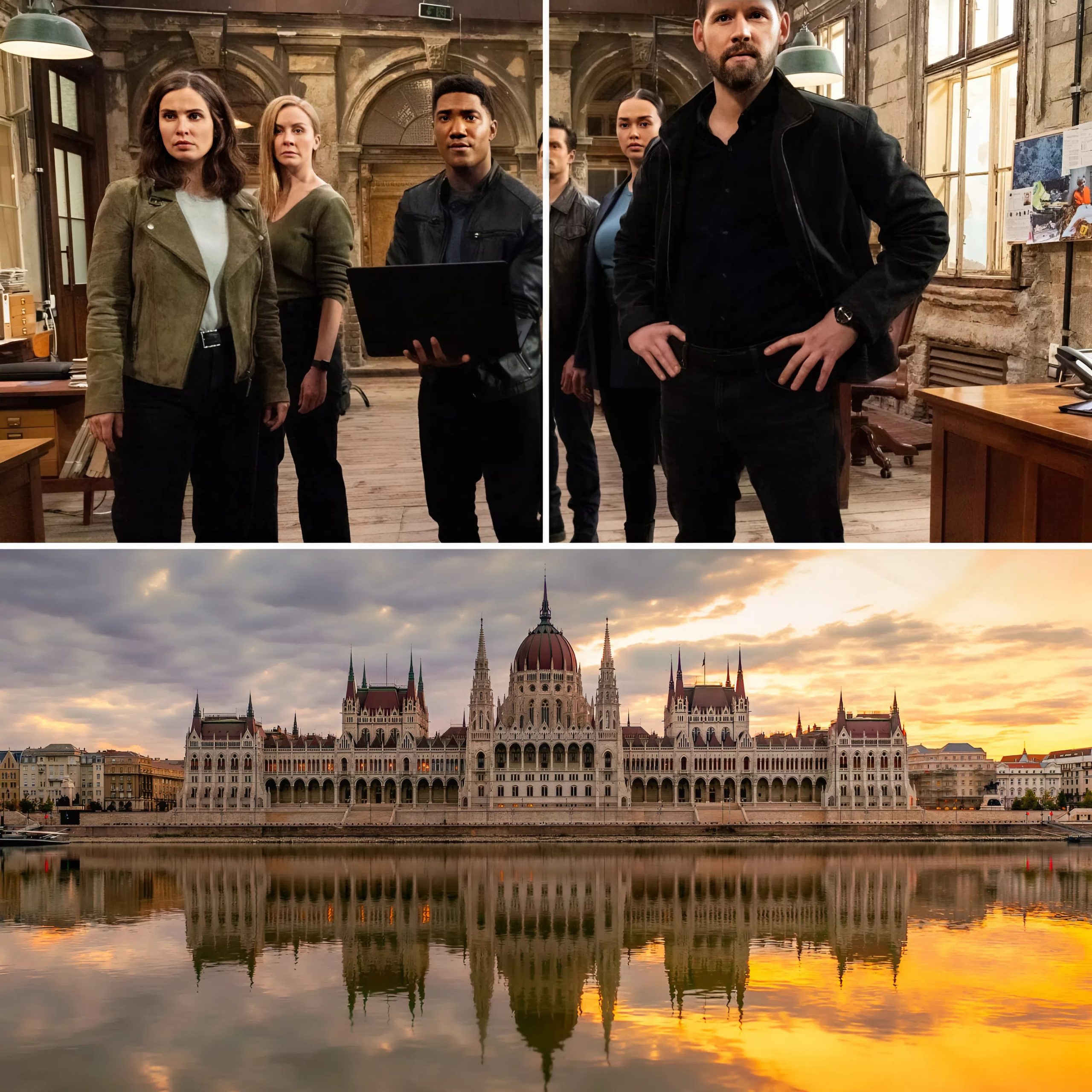
Inside the “FBI: International” Production Calendar — A Detailed Breakdown of When and How the Fly Team Scenes Are Filmed
For a series as globe-spanning and logistically complex as FBI: International, filming isn’t just about cameras rolling — it’s a carefully orchestrated operation that moves across countries, weather systems, and tightly controlled production windows.
While fans see seamless transitions from Budapest streets to Prague landmarks to high-stakes action scenes in anonymous European alleys, the reality behind the camera is a tightly scheduled production cycle that often begins months before a single scene reaches television.
And in recent seasons, that schedule has become even more ambitious.
The Core Filming Base: Year-Round Production in Budapest
Most of the series is anchored in Budapest, Hungary, where production is structured around long, continuous shooting blocks rather than short bursts of filming.
This is where studio work, interior Fly Team headquarters scenes, and many controlled action sequences are filmed throughout the year.
The production typically operates in extended cycles:
- Spring–Summer block: Heavy on outdoor action, European street sequences, and daylight investigations
- Fall block: Transition into darker-toned episodes, nighttime chases, and more interior-heavy storytelling
- Winter block: Studio-based filming, emotional character episodes, and tightly controlled set pieces
Budapest remains the production’s stabilizing force, allowing the show to maintain continuity even when the story “travels” across Europe.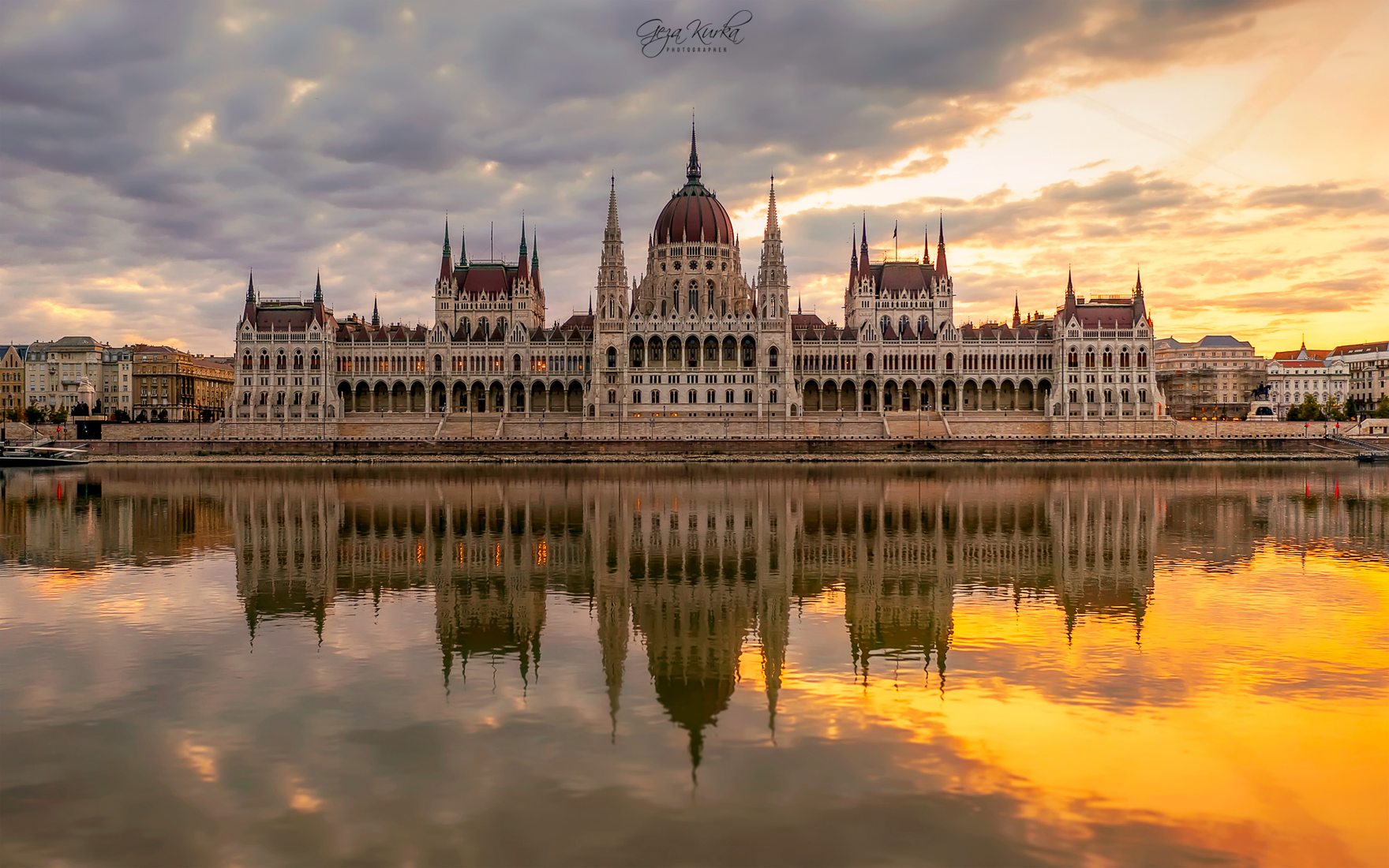
European Location Shoots: Short, High-Intensity Travel Windows
While Budapest handles the backbone of production, the series becomes truly “international” during short, high-intensity filming windows across Europe.
These location shoots are not random — they are carefully clustered into compact travel blocks, usually lasting between 3 to 10 days per city.
During these periods, the cast and crew move rapidly between countries such as:
- Czech Republic (Prague sequences)
- Croatia (coastal and historical settings)
- Italy (urban investigation storylines)
- Austria and neighboring regions for border-crossing narratives
Each destination is selected months in advance based on script requirements, weather conditions, and local filming permissions.
These travel blocks are among the most physically demanding parts of production, often involving overnight shoots and rapid set reconfiguration.
Seasonal Timing: Why Weather Controls the Entire Show
Unlike many studio-heavy crime dramas, FBI: International is deeply dependent on real weather conditions.
This creates a unique production rhythm:
Spring (March–May)
The most flexible filming season. Scripts are often scheduled here for:
- Street-level investigations
- Public crowd scenes
- Establishing shots of European cities in bloom
Spring is also when production builds momentum after winter studio-heavy episodes.
Summer (June–August)
The busiest and most visually dynamic period.
This is when the show films:
- Major action sequences
- Outdoor surveillance operations
- Large-scale international missions
However, summer also brings challenges: tourist crowds in European cities often force early-morning or late-night shoots to avoid disruptions.
Autumn (September–November)
Often considered the most visually cinematic season.
The production leans into:
- Moody lighting
- Psychological episodes
- Complex emotional story arcs
This is also when major character-driven episodes are frequently filmed, especially those focusing on leadership changes or internal Fly Team tension.
Winter (December–February)
The most controlled and studio-reliant period.
Because of harsh weather conditions across Europe, filming shifts heavily to:
- Interior Fly Team headquarters scenes
- Emotional aftermath episodes
- Dialogue-heavy investigations
This is also when scripts are often rewritten or adjusted based on earlier seasonal footage.
Actor Scheduling: A Puzzle Across Continents
The ensemble cast of FBI spin-offs often works on overlapping schedules, but FBI: International presents a unique challenge: actors must remain available for sudden international shoots.
For performers like Vinessa Vidotto and Carter Redwood, filming is rarely linear.
Instead, their work is often broken into:
- “Home base” filming in Budapest studios
- Short bursts of location travel
- Rapid return cycles for ongoing storyline continuity
This fragmented schedule is one reason the show maintains such a fast-paced narrative style — production itself mirrors the Fly Team’s constant movement.
Action Episodes: The Most Complex Filming Blocks
The most logistically demanding episodes are those involving:
- Cross-border chases
- Hostage negotiations
- Multi-location investigations within a single storyline
These episodes are typically filmed out of sequence over several weeks and later stitched together in editing.
A single action-heavy episode may require:
- 2–3 weeks of preparation
- 5–7 days of principal photography
- Additional reshoots in Budapest studios
These episodes often become season highlights because of their cinematic scale — but they also represent the highest production risk.
Unexpected Delays: The Hidden Reality of International Filming
Despite meticulous planning, the production frequently deals with unpredictable disruptions:
- Sudden weather changes in Central Europe
- Permit delays for historic city locations
- Public crowd interference during outdoor shoots
- Security restrictions for politically sensitive storylines
These factors sometimes force last-minute script adjustments, meaning certain scenes are rewritten on the fly to match available locations.
In some cases, entire sequences are relocated from one country to another without changing the narrative intent.
Why the Schedule Matters to the Storytelling Itself
What makes FBI: International unique is how deeply production timing shapes storytelling.
Because filming is so dependent on seasonal windows and location access, the show naturally develops:
- Moodier winter story arcs
- High-energy summer action cycles
- Emotionally introspective autumn episodes
In other words, the production calendar is not just logistics — it quietly influences tone, pacing, and even character development.
This may also explain why recent seasons feel more emotionally intense: longer studio periods allow writers to focus more on internal character struggles rather than purely external missions.
The Bottom Line: A Show Built on Constant Motion
Unlike traditional network dramas filmed in a single city or studio, FBI: International operates like a traveling production unit that never fully stops moving.
From Budapest’s structured base to Europe’s rapidly shifting location shoots, every episode is the result of carefully timed production layers stacked across months of planning.
And while viewers see a seamless global investigation team, the reality is far more complex: a show constantly racing against time, geography, and logistics — just like the Fly Team itself.