
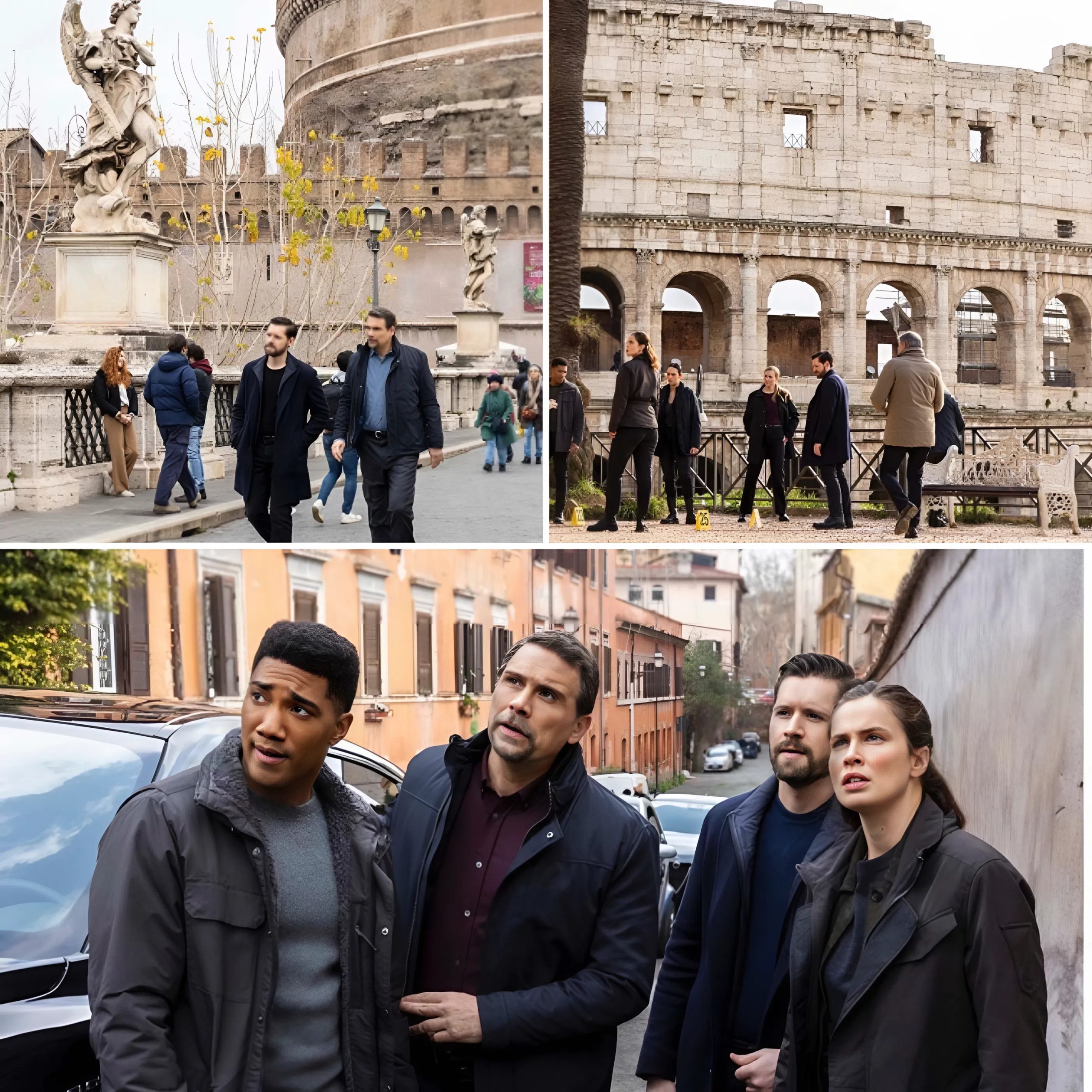
“FBI: International” Filming Locations Revealed — Inside the Real European Cities Behind the Fly Team’s Most Dangerous Missions
Behind every high-stakes chase and tense interrogation in FBI: International lies a surprising reality that many fans still don’t fully realize: the globe-trotting crime drama is actually filmed across real European cities — and not just one studio set.
As the series continues to gain attention for its intense storylines and emotional character shifts, fans are now equally obsessed with something else: Where is it really filmed, and how do these locations shape the show’s shocking realism?
The answer is more cinematic — and more international — than expected.
Budapest: The Hidden Headquarters of the Fly Team
At the heart of the production is Budapest, Hungary — the true base of operations both on-screen and behind the camera.
In the series, the Fly Team operates from a European headquarters that allows them to respond to crimes across borders. In real life, much of that “international headquarters” energy is created in Budapest’s historic streets, bridges, and studio facilities.
Production crews frequently film around iconic locations such as Buda Castle, Chain Bridge, and Castle Garden Bazaar, blending old-world European architecture with modern crime drama tension. (Oreate AI)
Budapest isn’t just a backdrop — it functions as a storytelling engine. Its versatility allows it to double for multiple countries, meaning one street can suddenly become Berlin, Paris, or Madrid depending on the episode’s plot.
Industry insiders say this flexibility is exactly why the production chose Hungary as its main hub.
Why Budapest Became the Show’s Creative Power Center
According to production reports, Budapest offers something rare: a combination of affordability, cinematic architecture, and access to skilled international crews.
Studios like Origo Studios have played a major role in elevating the series’ production quality, providing large-scale sets and controlled environments for complex action sequences. (Origo Studios Budapest)
But the real advantage is outside the studio.
From narrow cobblestone streets to grand bridges and riverside views, the city can instantly transform into multiple global hotspots — a necessity for a show that spans terrorism cases, kidnappings, and cross-border investigations.
Fans often say they recognize Budapest in episodes without realizing it — a testament to how seamlessly it blends into the storytelling.
Across Europe: The Show That Never Stays in One Country
While Budapest is the core, the Fly Team’s missions regularly take the production across Europe.
Recent filming has extended to countries like Croatia, the Czech Republic, Norway, and Italy, with cities such as Prague, Pula, and Oslo serving as dramatic backdrops. (IMDb)
One of the most talked-about production moves involved Prague, where entire city blocks were temporarily transformed into active filming zones. Scenes shot around Old Town Square and Charles Bridge brought a darker, more cinematic tone to the series. (filmcommission.cz)
In Croatia, historic Roman landmarks like Pula’s amphitheater have also been used, giving certain episodes a distinctly ancient yet haunting atmosphere. (Wolf Entertainment)
The result is a show that doesn’t just pretend to be international — it actually is.
Fans React: “It Feels Like a Travel Thriller Now”
As filming locations have expanded, viewers have noticed a major shift in tone.
Instead of feeling like a traditional FBI procedural, the series now resembles a hybrid between crime drama and European travel thriller. Each episode introduces new cultural landscapes, languages, and political environments.
Fans online have even started tracking episodes based on scenery alone, with some claiming the locations are now “a character of their own.”
But this global expansion also adds pressure: filming in real cities means unpredictable weather, logistical delays, and the challenge of coordinating action scenes in active public spaces.
The Real Cost of Going “International”
While the show’s realism benefits from on-location filming, production is far from simple.
Large-scale shoots in European capitals often require shutting down streets, coordinating with local authorities, and adapting scripts to match available locations. That means storylines sometimes evolve based on what can realistically be filmed on location.
This unpredictability has led to some of the series’ most unexpected visual styles — from nighttime river chases in Budapest to tense alleyway confrontations in Prague.
Producers reportedly embrace this chaos, arguing that it adds authenticity that studio sets simply cannot replicate.
A Franchise Built on Real Geography — and Real Risk
Unlike many crime dramas that rely heavily on soundstages, FBI: International has built its identity on real geography.
That decision has helped the show stand out within the larger FBI universe, but it also raises the stakes for everyone involved — both in production and storytelling.
Real locations mean real-world constraints. And real-world constraints often lead to more grounded, unpredictable storytelling.
Which may explain why the series has recently leaned into darker emotional arcs, fractured team dynamics, and increasingly dangerous missions.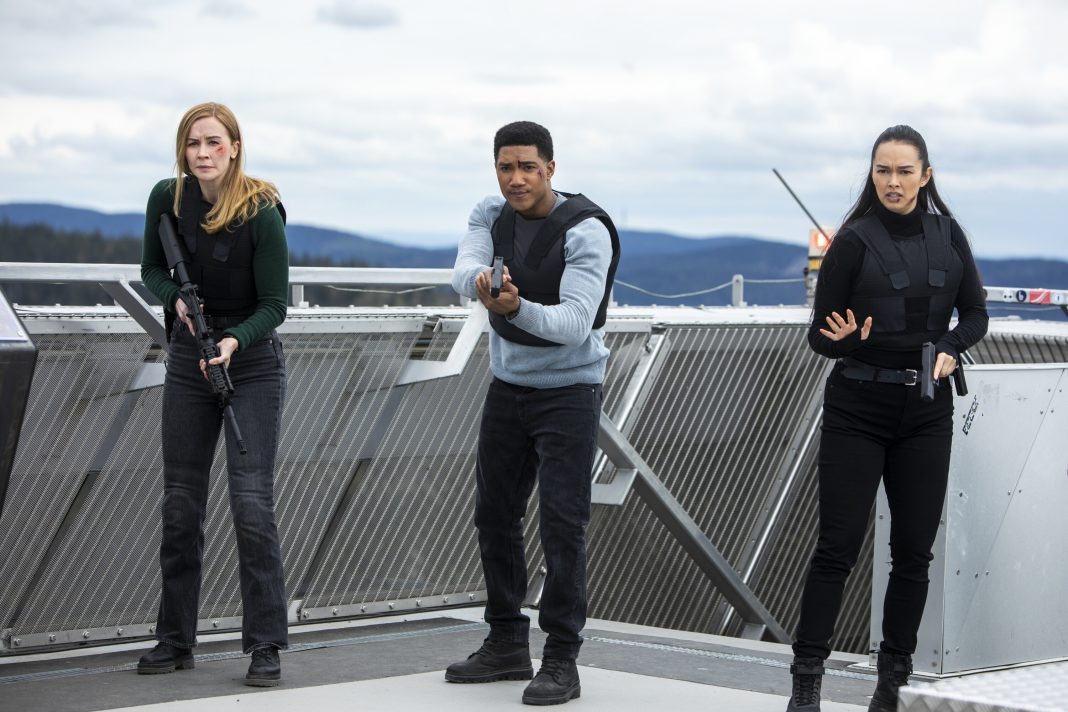
Why the Filming Locations Matter More Than Ever
As the series continues evolving, its filming locations are no longer just background detail — they are central to the show’s identity.
Budapest gives it stability. Prague adds tension. Croatia brings visual spectacle. Each city contributes something different to the Fly Team’s world.
And as the show pushes further into emotional and narrative complexity, those real-world settings may be what keep it grounded in authenticity.
Because in FBI: International, the world isn’t just something the team investigates.
It’s the battlefield itself.